

Human-in-the-Loop AI: Why Businesses Should Never Automate Everything
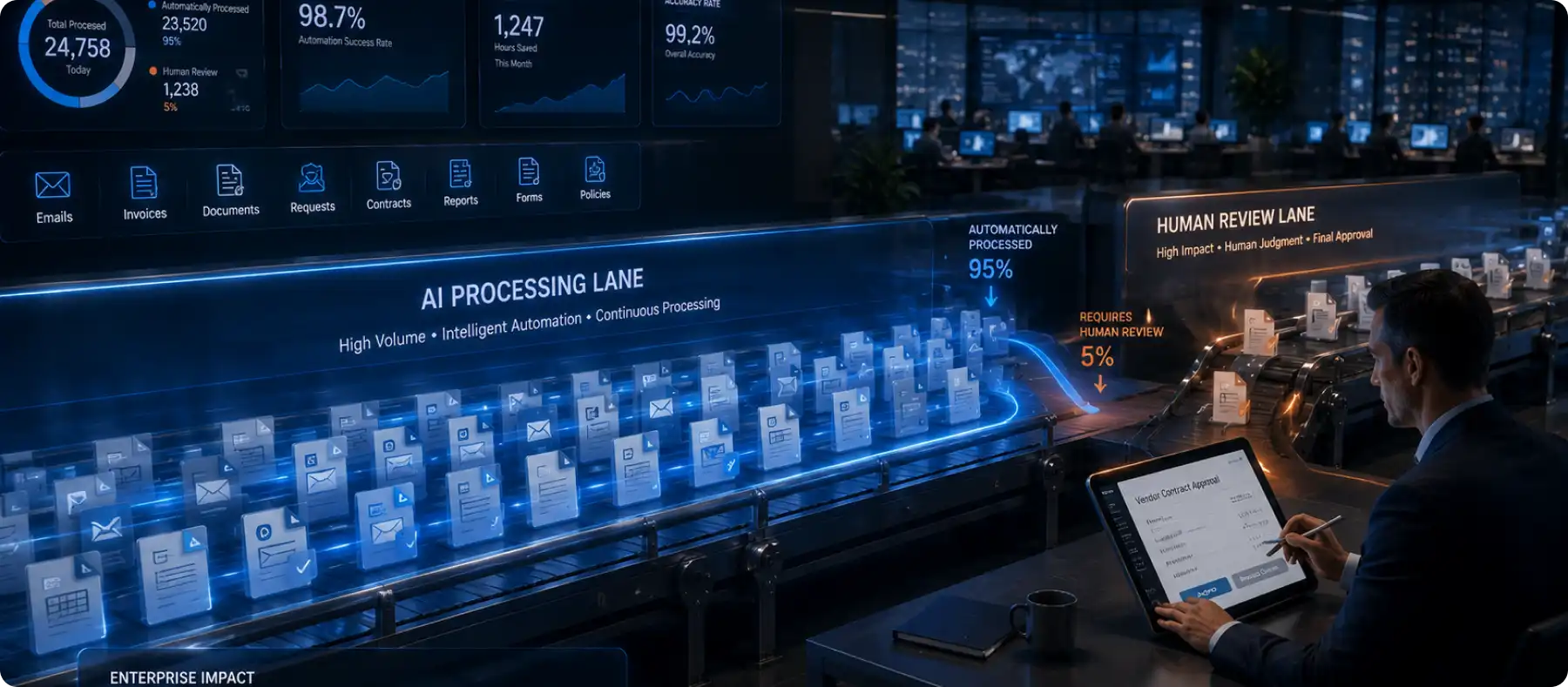
There's a temptation, once an AI system is working well, to remove people entirely and "just automate the whole thing." It's usually a mistake. The most reliable, trustworthy AI systems keep humans involved at the points that matter — an approach known as human-in-the-loop.
This isn't about distrusting AI or holding back progress. It's about recognising what AI is, where its limits are, and designing systems that are both efficient and safe. Here's why businesses should never automate everything — and how to get the balance right.
The goal of automation is to remove the repetitive parts of a job, not human judgement. Keep people on the decisions that carry weight.
What human-in-the-loop means
Human-in-the-loop simply means a person reviews or approves at the points that matter, rather than the AI acting entirely on its own. In practice, the AI handles volume and prepares work — reading, drafting, sorting — flags anything it's unsure about, and stops for human approval before consequential actions. People handle exceptions and decisions; AI handles the repetitive load.
Why you shouldn't automate everything
The core reason is what AI is: a probabilistic system that can be confidently wrong. Unlike deterministic software that behaves identically every time, AI produces varied output and occasionally makes mistakes that look perfectly plausible. For low-stakes, high-volume work, that's fine. For decisions with real consequences, it isn't.
When a wrong output could move money incorrectly, breach a regulation, damage a customer relationship, or affect someone's outcome, a human checkpoint isn't bureaucracy — it's the control that stops a plausible-looking mistake from executing silently. Full automation removes exactly the safeguard those decisions need.
Where human oversight matters most
Not everything needs a human checkpoint, so focus oversight where it counts:
- Financial decisions — payments, valuations, anything involving money.
- Compliance and regulatory matters — where being wrong is a breach and accountability is required.
- High-stakes customer outcomes — decisions that significantly affect a customer.
- Sensitive or irreversible actions — anything hard to undo once done.
Routine, low-risk, high-volume work is where AI can safely handle more on its own. The art is drawing the line in the right place.
Keeping humans involved doesn't defeat automation
A common worry: doesn't keeping people in the loop cancel out the efficiency gains? No — because the point is to remove the repetitive parts of a job, not the judgement. Staff stop doing the tedious reading, sorting, and drafting, and spend their time on exceptions, decisions, and relationships. That's where their value is, and where the real return comes from.
How to expand automation safely
Human-in-the-loop isn't static. Start with review on most paths, then use evidence: measure where the AI performs reliably, and on those proven, low-risk paths you can let it handle more on its own — deliberately, based on data, not by flipping a switch on day one. Consequential decisions keep a human checkpoint regardless. This way automation grows with your confidence, rather than outrunning it.
The balance to aim for
The goal isn't maximum automation; it's the right automation. AI handling the volume, people keeping the judgement, oversight concentrated where consequences are real, and the balance shifting as evidence accumulates. Systems built this way are both efficient and trustworthy — which is what makes them last.
KBA Systems designs AI systems around exactly this principle: automating the repetitive load while keeping people firmly in control of the decisions that matter.
Frequently Asked Questions
What is human-in-the-loop AI?
Human-in-the-loop AI means a person reviews or approves at the points that matter, rather than the AI acting fully autonomously. AI handles volume and drafts, flags what it's unsure about, and stops for human approval before consequential actions.
Why shouldn't businesses automate everything?
Because AI is probabilistic and can be confidently wrong, and some decisions carry real consequences — money, compliance, customers, safety. Keeping humans on those decisions prevents mistakes from executing silently and maintains accountability.
Where is human oversight most important?
On anything consequential or hard to reverse: financial decisions, compliance and regulatory matters, high-stakes customer outcomes, and sensitive judgements. Routine, low-risk, high-volume work is where AI can safely handle more on its own
Does keeping humans involved defeat the purpose of automation?
No. The goal is to remove the repetitive parts, not human judgement. Staff spend their time on exceptions, decisions, and relationships while AI handles the volume — which is where the real value is.
How do you decide what to automate fully versus review?
Use evidence. Start with human review on most paths, measure where the AI is reliable, and only reduce oversight on proven, low-risk paths — deliberately, not by default. Consequential decisions keep a human checkpoint.
If you're introducing AI into important processes,
KBA Systems can help design the right human-in-the-loop approach — deciding what AI handles, where people approve, and how to expand safely as the system earns trust.
Related Article
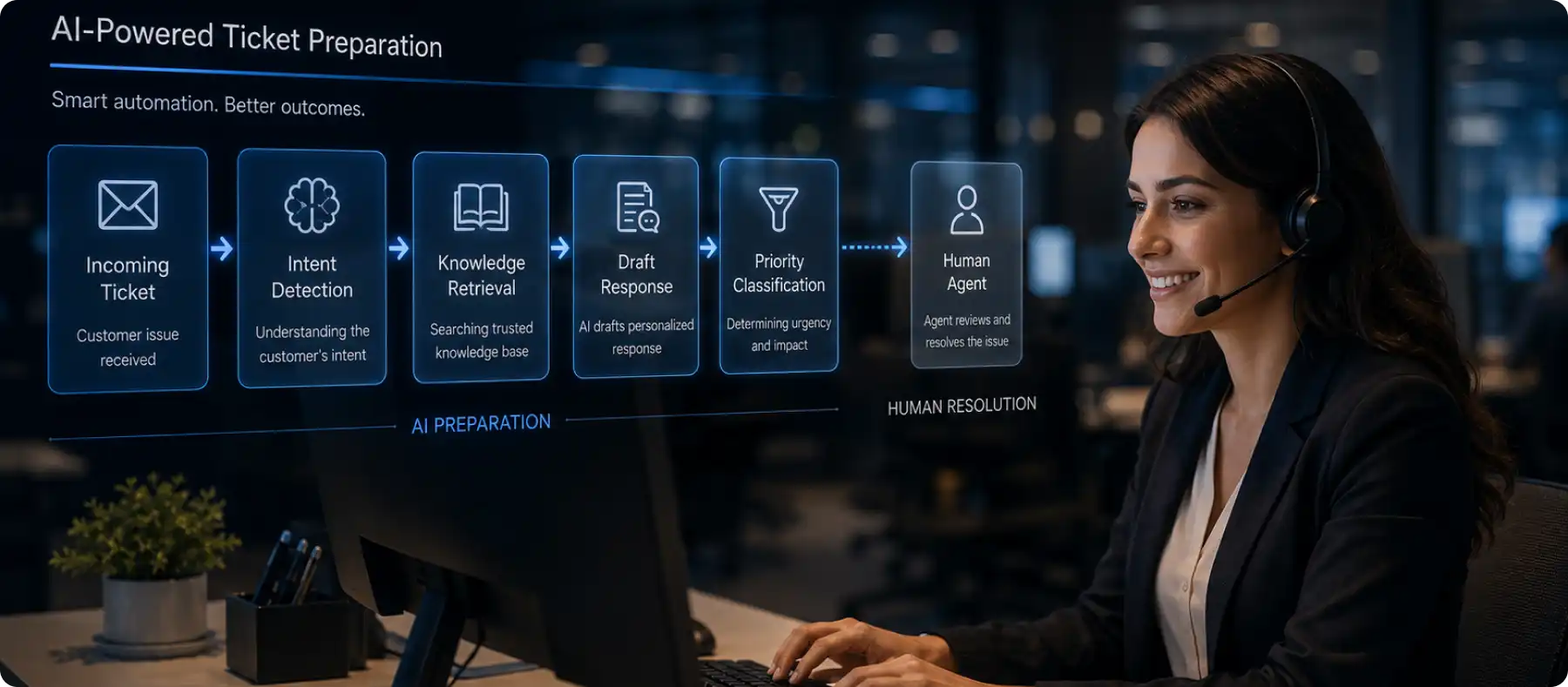
How AI Can Improve Customer Service Without Replacing Your Support Team
How AI can improve customer service without replacing your support team — triage, drafting, knowledge retrieval and where human agents stay essential.

Building an Enterprise Knowledge Assistant: Benefits, Challenges and Best Practices
How to build an enterprise knowledge assistant — benefits, challenges, permissions, source citations and best practices for AI search across company knowledge.

Stop Building Apps. Start Architecting Intelligent Systems.
Whether you need to modernize legacy infrastructure or build custom AI agents from scratch, our elite engineering pods are ready to design your competitive edge. Let’s map out your transition.
