

How AI Can Improve Customer Service Without Replacing Your Support Team
Mention AI in customer service and many people picture a frustrating bot standing between customers and the help they need. That's what happens when AI is used badly. Used well, AI does the opposite: it takes the repetitive load off your support team so they can give customers more attention, not less.
The goal isn't to replace your agents — it's to make them faster and free them for the cases that genuinely need a person. Here's how AI can improve customer service while keeping your team firmly at the centre of it.
Good AI customer service removes the repetitive work, not the people. AI handles volume; agents handle the moments that matter.
What AI does well in customer service
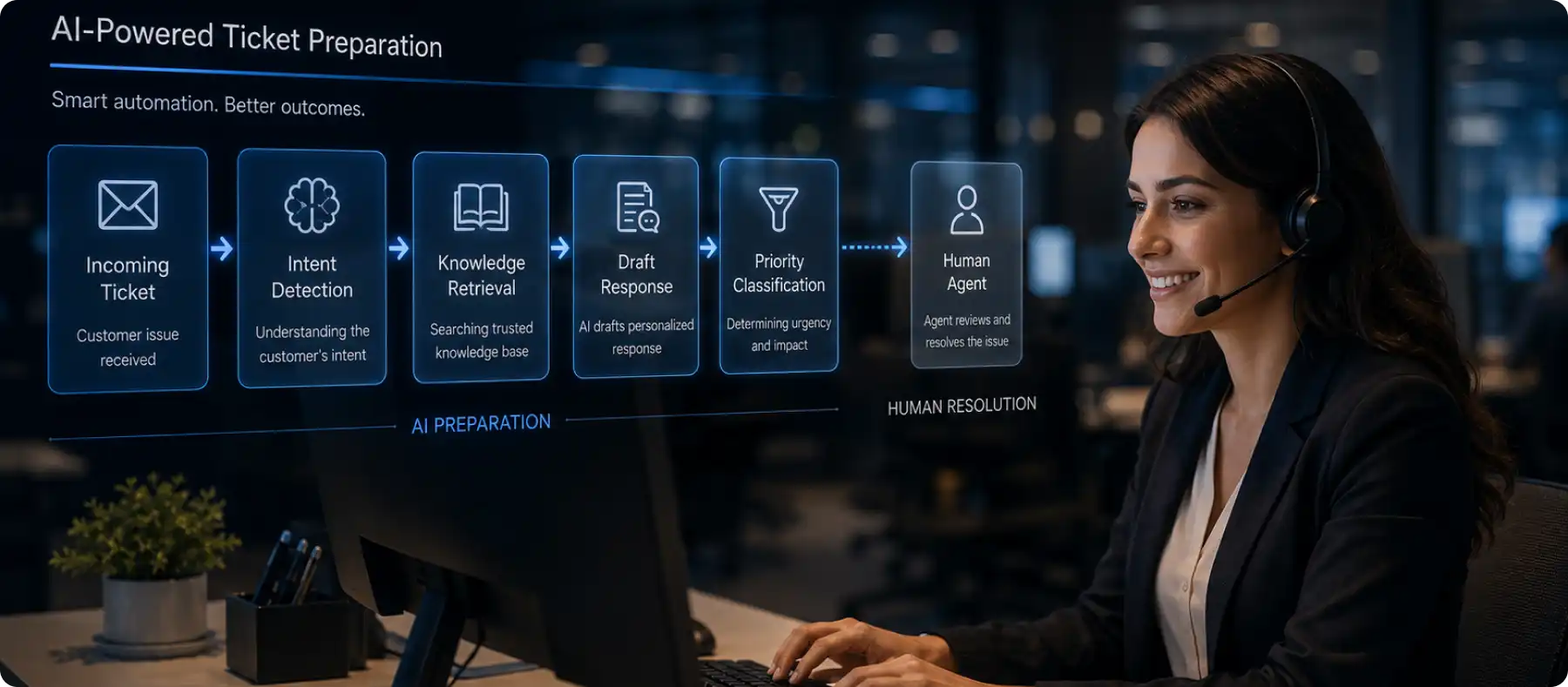
AI is strong at the repetitive front-end of support. It can read an incoming request, understand what the customer actually wants, pull the relevant approved information, and draft a response — with straightforward cases queued for a quick agent check and anything sensitive routed to the right person with context already gathered.
- Triage. Reading and classifying incoming requests, then routing them to the right place.
- Drafting responses. Preparing replies to routine enquiries for an agent to review and send.
- Knowledge retrieval. Pulling the right information so agents don't have to search for it.
- Gathering context. Assembling account details so a person can resolve a case faster.
Why this helps your team, not replaces it
When AI handles the routine volume — the repetitive questions, the sorting, the first-draft replies — your agents are freed from the tedious part of the job. They spend their time on complex, sensitive, and relationship-driven cases where human judgement and empathy actually matter. Customers get faster responses on simple things and better attention on hard things. That's an improvement for everyone, not a replacement of anyone.
What should stay with human agents
Some cases need a person, and a well-designed system routes them there rather than forcing AI to handle them:
- Complaints and upset customers — these need empathy and judgement.
- Refunds and account changes — consequential actions that warrant human approval.
- Complex or unusual situations — anything outside the routine.
- Sensitive or high-stakes matters — where getting it wrong really costs.
The AI's job on these is to recognise them and hand them to the right agent with context ready — not to attempt them itself.
It integrates with your existing helpdesk
Adopting AI here doesn't mean replacing your support platform. AI typically connects to the helpdesk you already run through its API, reading requests and drafting or routing responses, without changing your system of record. It becomes a layer that supports your existing tools and team, which keeps the change manageable and low-risk.
Keeping quality and tone under control
To keep responses accurate and on-brand, ground them in approved information, use clear guardrails, and — crucially — keep a human reviewing before sending for anything non-trivial. Drafting for agent review rather than sending autonomously keeps quality, accuracy, and tone firmly under your control while still saving significant time.
The result
Done this way, AI makes customer service faster and more consistent on routine matters, gives agents more time for the cases that need care, and keeps the human relationship at the centre. The measure of success isn't how many customers avoid a human — it's how much better both the fast answers and the human conversations become.
KBA Systems integrates AI into existing customer-service systems on exactly this basis: handling the routine load, routing the rest to people, and keeping your team — and your customers' experience — at the heart of it.
Frequently Asked Questions
How can AI improve customer service?
AI can read incoming requests, understand intent, pull relevant approved information, draft responses, and route difficult cases to the right agent with context ready. It speeds up routine support and reduces waiting, while people handle the cases that need care.
Will AI replace customer service agents?
In most well-designed setups, no. AI removes repetitive work — reading, sorting, drafting — so agents focus on complex, sensitive, and relationship-driven cases. The reliable pattern is AI handling volume while people keep the judgement.
What customer service tasks should stay with humans?
Complaints, refunds, account changes, upset customers, and anything sensitive or high-stakes. These need empathy, judgement, and accountability, so they should be routed to a person rather than handled autonomously.
Does AI customer service integrate with our helpdesk?
Yes. AI typically connects to the support system you already run through its API, reading requests and drafting or routing responses, without replacing the helpdesk. It becomes a layer that supports your existing tools and team.
How do we keep AI responses accurate and on-brand?
Ground responses in approved information, keep a human reviewing before sending for anything non-trivial, and use clear guardrails. Drafting for agent review — rather than sending autonomously — keeps quality and tone under control.
If you want faster, better customer service without losing the human touch,
KBA Systems can integrate AI into your existing support systems — handling the routine load while your agents focus on the cases that need real care.
Related Article
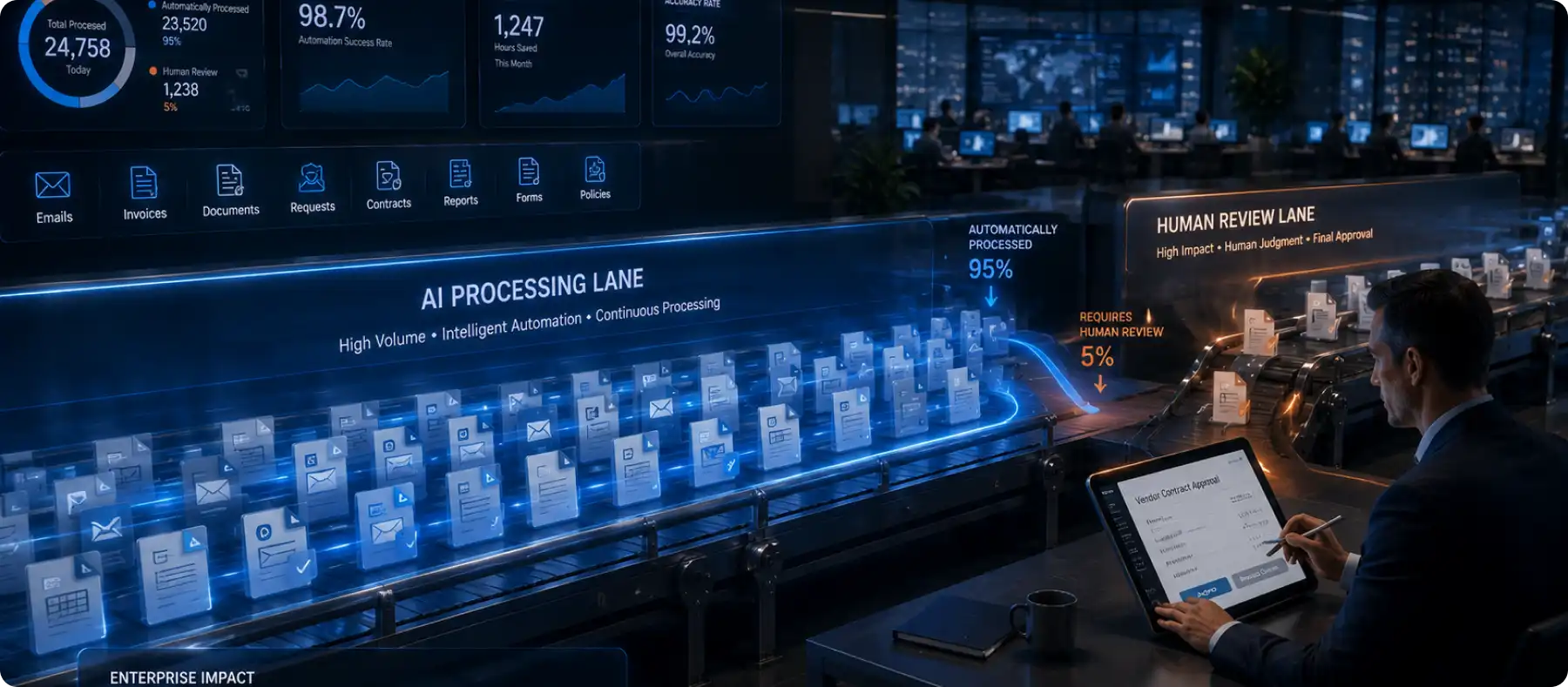
Human-in-the-Loop AI: Why Businesses Should Never Automate Everything
Human-in-the-loop AI explained — why businesses should never automate everything, where human oversight matters most, and how to design review into AI systems.

Building an Enterprise Knowledge Assistant: Benefits, Challenges and Best Practices
How to build an enterprise knowledge assistant — benefits, challenges, permissions, source citations and best practices for AI search across company knowledge.

Stop Building Apps. Start Architecting Intelligent Systems.
Whether you need to modernize legacy infrastructure or build custom AI agents from scratch, our elite engineering pods are ready to design your competitive edge. Let’s map out your transition.
